Quiet Boundaries for the Always-On Culture: How to Protect Time Without Anyone Noticing

Protecting Time Without Losing Influence
If you are working 24/7, constantly on call, and wondering how to set boundaries at work without hurting your career, you are not alone.
Many high achievers in demanding roles feel trapped in always-on culture — where responsiveness equals value and availability justifies compensation.
Executives. Physicians. Attorneys. Founders. Senior operators.
You are paid to handle pressure.
But chronic hyper-availability often leads to executive burnout, relationship strain, and long-term nervous system dysregulation.
At Lisa Chen & Associates Therapy in Hermosa Beach, we work with high-performing professionals across the South Bay who want to sustain success without sacrificing their health or family life.
The solution is not dramatic confrontation.
It is quiet boundaries.
What Is Always-On Culture?

Always-on culture refers to professional environments where constant availability and immediate responsiveness are expected. Over time, this keeps the stress response activated.
According to the American Psychological Association, chronic workplace stress without adequate recovery increases risk for anxiety, cardiovascular strain, and burnout.
When your phone represents potential urgency at any hour, your nervous system never fully powers down.
You may notice:
• Difficulty relaxing even on vacation
• Irritability at home
• Light, disrupted sleep
• Fantasizing about quitting your high-paying job
• Feeling emotionally unavailable in your relationship
This is not weakness. It is physiological depletion.
Why “Just Set Boundaries” Doesn’t Work for High Achievers
Most high performers already know boundaries matter.
They hesitate because:
• They report to demanding leadership
• Their compensation reflects crisis management
• Their identity is tied to reliability
• They fear becoming replaceable
If you are searching “how to stop being always on at work” or “working 24/7 burnout,” you likely do not need a lecture. You need realistic strategies.
That is where micro-boundaries come in.
What Are Quiet Boundaries?
Quiet boundaries are subtle behavioral shifts that protect energy without public declarations.
They are performance-aligned.
They are consistent.
They are strategic.
Consider well-known executives. Satya Nadella protects no-meeting blocks for focus. Sheryl Sandberg structured her departure time to prioritize family. These were not loud announcements. They were disciplined habits.
High performance requires recovery. Leadership without recovery becomes reactivity.
Five Quiet Boundaries That Actually Work in High-Demand Roles
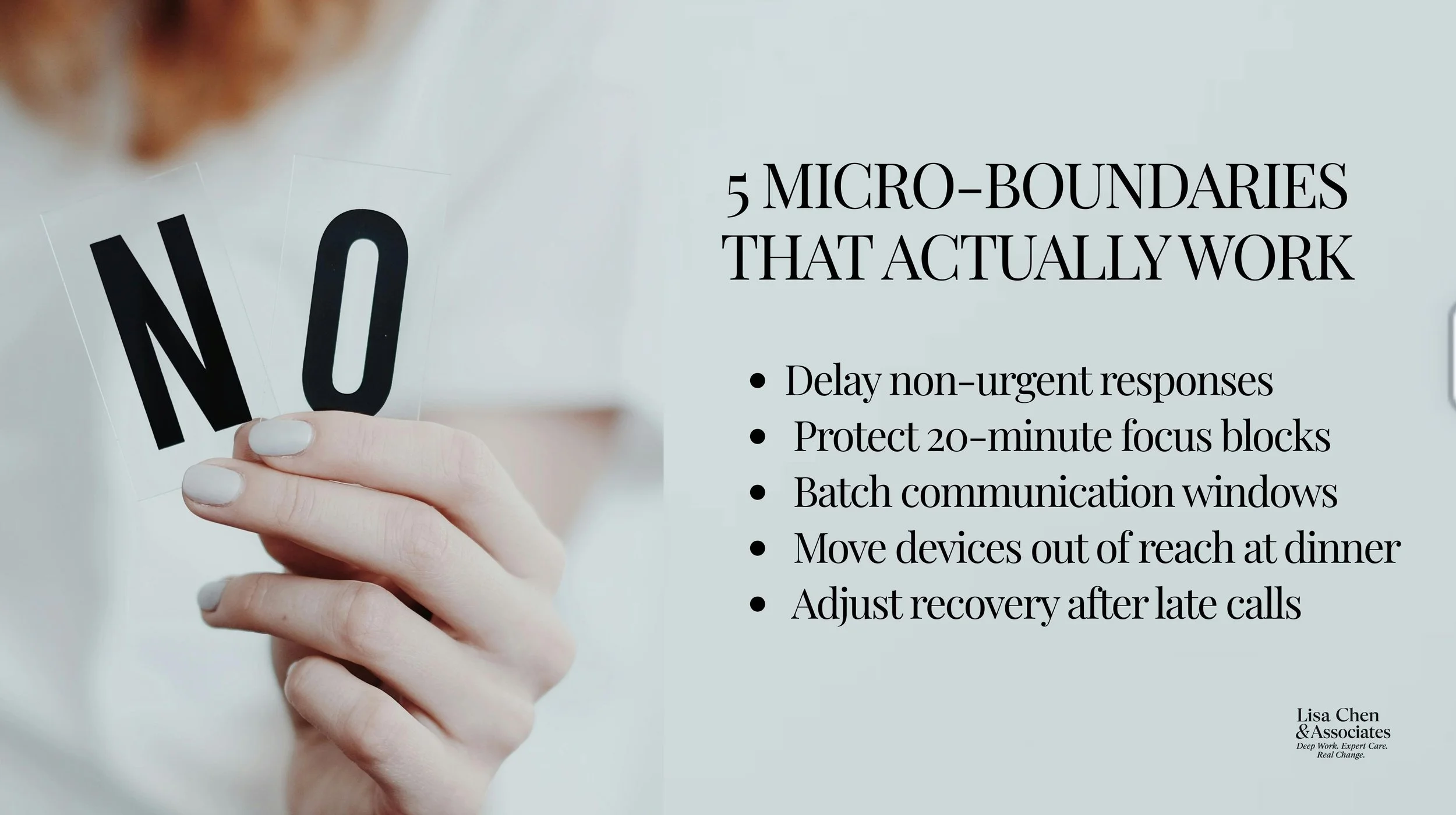
Micro-boundary strategies for executives experiencing burnout
Delayed Non-Urgent Responses
Not every email requires a five-minute turnaround. A consistent 30–60 minute delay for non-urgent communication retrains urgency patterns without lowering standards.Protected Micro Focus Blocks
Block 20 minutes daily for thinking or strategic planning. No announcement required. Protect it quietly.The Recovery Morning Rule
If you are on late-night calls, adjust your next morning start time when feasible. Prevent cumulative sleep debt.Physical Device Separation
Move your phone out of arm’s reach during dinner. Charge it outside the bedroom. Small environmental shifts reduce hypervigilance.Communication Batching
Respond to messages in structured windows rather than reactively throughout the day.
These are not acts of disengagement.
They are executive sustainability strategies.
The Nervous System and Executive Burnout
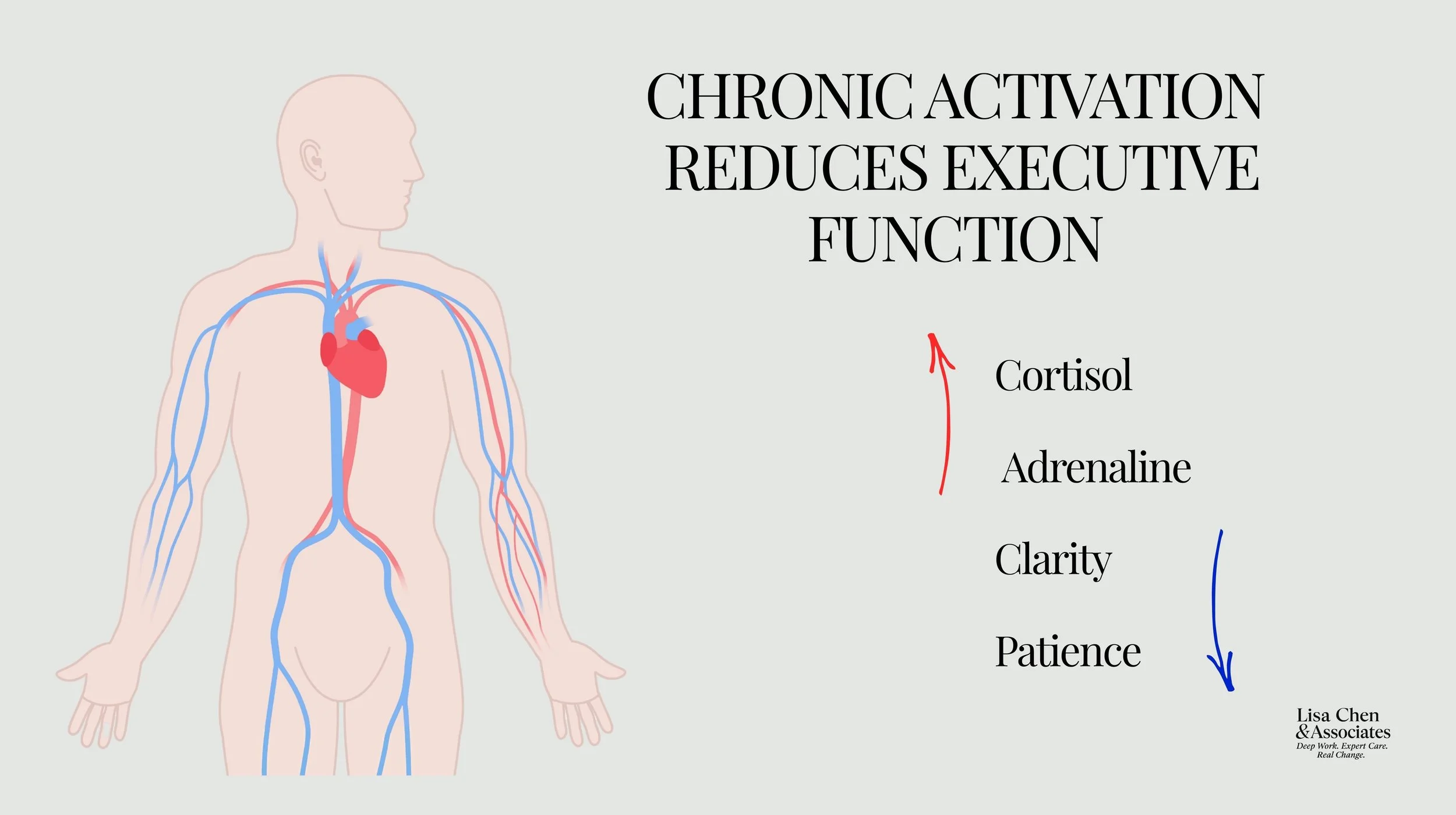
Nervous system effects of chronic workplace stress in executive burnout therapy
Chronic activation elevates cortisol and adrenaline. Over time, this impairs executive function, emotional regulation, and decision-making. The National Institute of Mental Health has documented how prolonged stress alters brain chemistry and attention.
Many high achievers mistake adrenaline for effectiveness.
But exhaustion reduces clarity.
In our burnout therapy work in Hermosa Beach, we often help professionals recalibrate their nervous system alongside practical behavioral shifts. You cannot lead sustainably from survival mode.
“High achievers are rarely afraid of hard work,” I often tell clients. “They are afraid of losing relevance. But chronic exhaustion is far more threatening to relevance than quiet boundaries ever will be.”
Why This Matters for Your Relationship
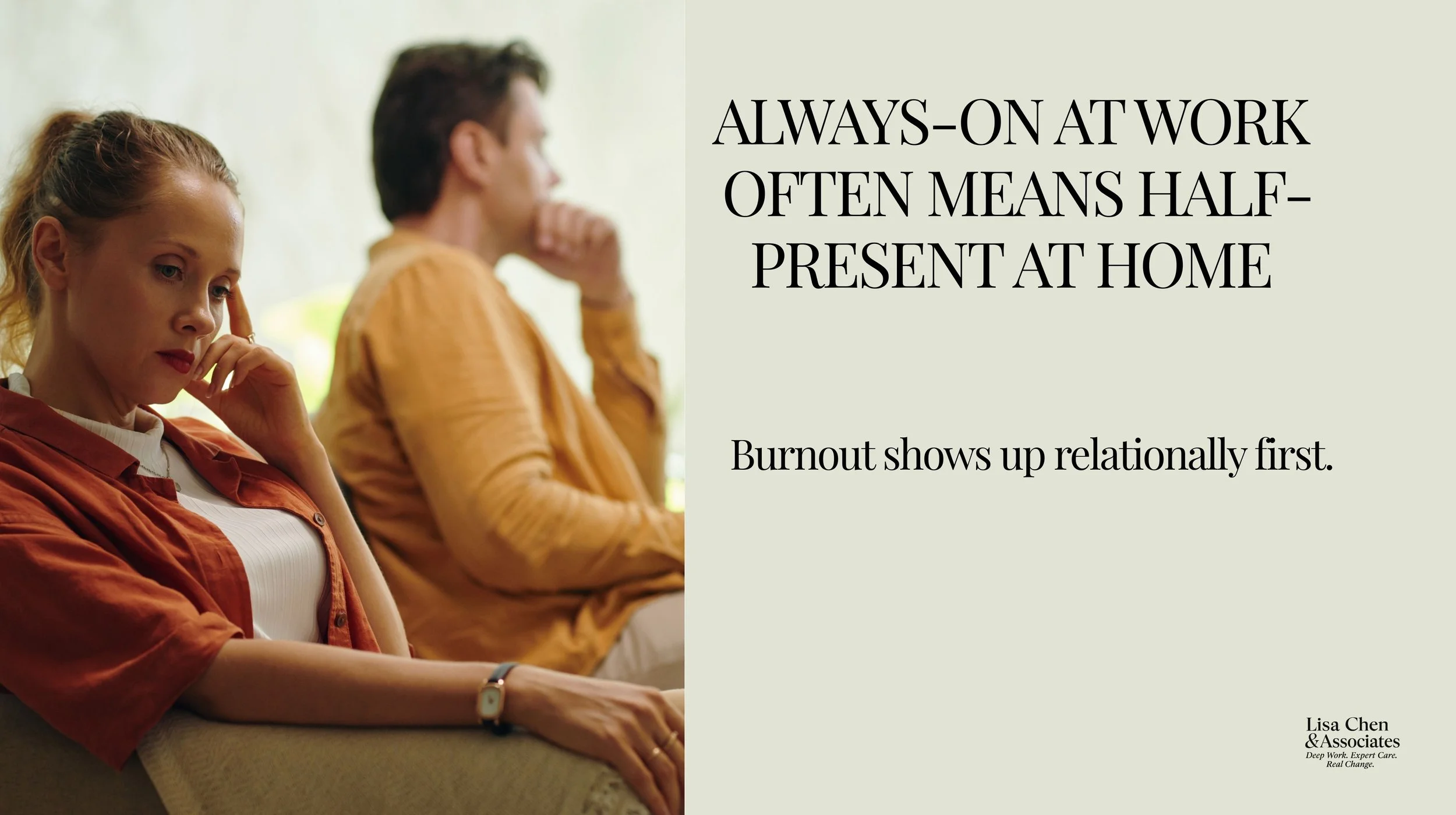
Executive burnout impacting marriage and relationships in Hermosa Beach therapy practice
Always-on culture rarely stays at work.
Partners feel secondary.
Children feel interrupted.
Presence becomes partial.
If you notice relational strain, you may benefit from reading our work on couples therapy for high-achieving professionals.
Burnout is often relational before it becomes occupational collapse.
How to Set Boundaries at Work Without Losing Your Job
Start small.
Choose one micro-boundary. Track its impact for two weeks. Notice whether performance declines — or improves.
Most high performers discover focus sharpens when cognitive fragmentation decreases.
Quiet boundaries protect performance. They do not undermine it.
If chronic stress, executive burnout, or working 24/7 is affecting your health or marriage, executive therapy in Hermosa Beach can help you recalibrate before drastic decisions are necessary.
You do not need to leave your career.
You may need to change how you inhabit it.
Quick Summary
Always-on culture keeps high achievers in chronic activation, leading to burnout, relationship strain, and reduced executive function. Quiet micro-boundaries such as delayed responses, protected focus time, device separation, and recovery mornings protect the nervous system without risking professional credibility. Sustainable leadership requires structured recovery.
Frequently Asked Questions
What is always-on culture?
Always-on culture refers to work environments where constant availability and immediate responsiveness are expected, often contributing to chronic stress and executive burnout.
How can I set boundaries at work without losing my job?
Use quiet micro-boundaries such as delayed responses to non-urgent emails, protected focus blocks, communication batching, and structured recovery time. These preserve performance while protecting energy.
Is working 24/7 causing my burnout?
If you struggle to relax, feel hyper-alert during downtime, experience irritability at home, or have chronic fatigue, always-on demands may be contributing to burnout.
What type of therapy helps executive burnout?
Executive burnout therapy often integrates nervous system regulation, stress processing, identity work, and boundary recalibration to support sustainable performance.
Action Checklist
Identify one non-urgent communication you can delay.
Block one 20-minute focus session daily.
Move your phone physically during one family interaction.
Notice your stress level before and after micro-boundary shifts.
Assess whether always-on culture is affecting your relationship.