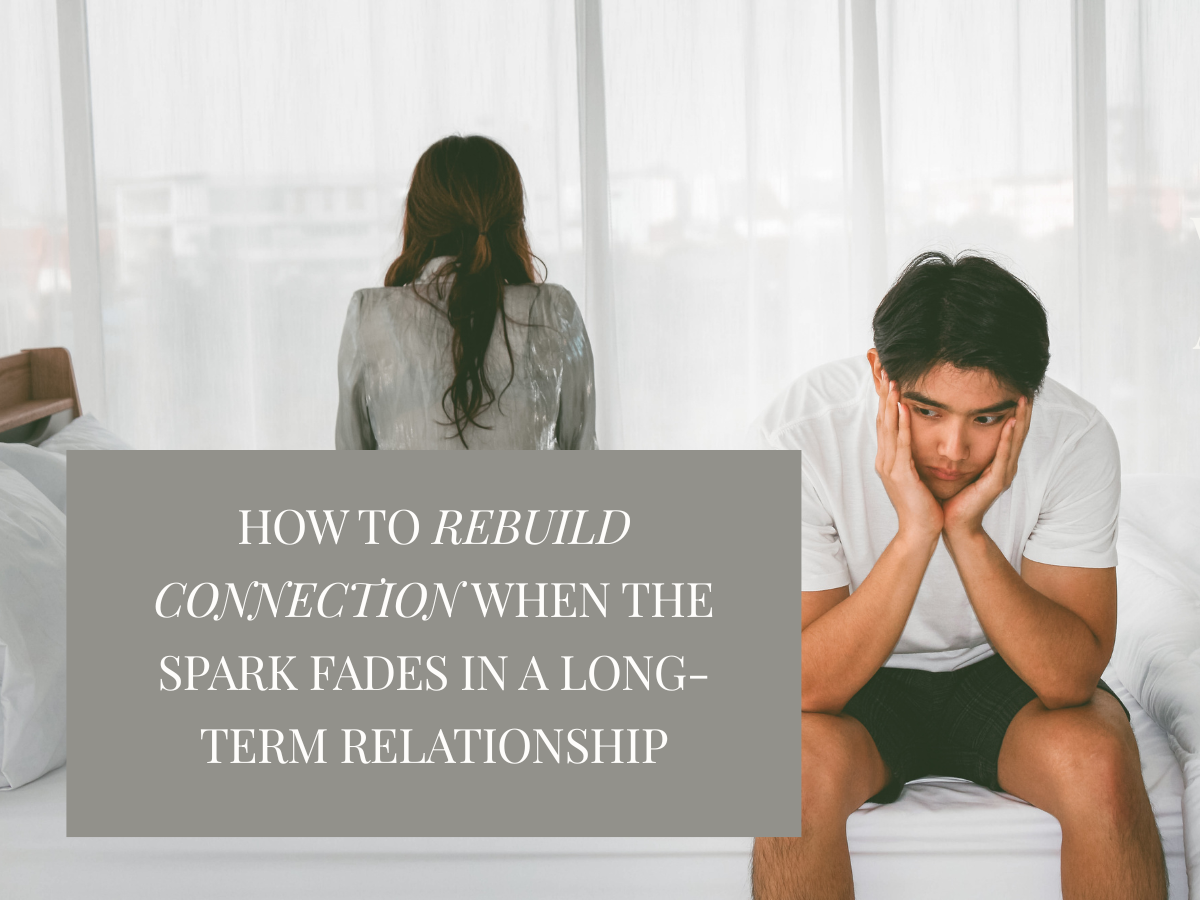
How To Rebuild Connection When The Spark Fades In A Long-Term Relationship
Written by Rebekah Richin, AMFT
Quick Summary
Losing the “spark” in a relationship is common, and often misunderstood. It doesn’t necessarily mean the relationship is over. More often, it signals a shift from early intensity to a deeper and more sustainable form of connection.
The honeymoon phase naturally fades within 1.5–3 years
Loss of spark is usually about disconnection, not incompatibility
Long-term love requires intentional effort, not just chemistry
Relationships can be rebuilt through emotional safety and consistent connection
Restarting a relationship isn’t about getting back to the beginning. It’s about building something more intentional and lasting.
Why The Spark Fades (And Why That’s Normal)
“I just don’t feel that same spark I felt in the beginning.”
In my work with individuals and couples, this is one of the most common concerns I hear. People often come in wondering why their relationship doesn’t feel the same as it did at the beginning, and whether that shift means something has gone wrong. What I often help couples understand is that this experience is not only normal, but one of the most predictable transitions in long-term relationships.
If you’ve ever felt it, you know exactly what the “spark” is. That indescribable, instinctive feeling you have around someone that sets them apart from everyone else. That spark can feel exciting, magnetic, and absolutely necessary for deep connection.
So, what happens when the spark, often called the “honeymoon phase”, doesn’t last forever?
Research shows that this intense period of infatuation, driven by dopamine and other neurotransmitters, typically lasts between 18 months and three years before naturally fading. It’s no coincidence that many couples struggle around this same timeframe. In fact, nearly 40% of cohabiting couples break up around the three-year mark - a pattern sometimes referred to as the “three-year glitch.”
This stage marks a transition from early intensity into long-term reality, where differences, unresolved conflicts, and questions about the future (like marriage, finances, or life direction) become more visible.
For many people, this shift feels like something has gone wrong. When the spark fades, it’s easy to assume the relationship is no longer working.
But what if that interpretation isn’t accurate?
In reality, this transition - from intensity to companionship - may not signal the end of love, but the beginning of a deeper, more sustainable kind of connection.
What It Actually Means When the “Spark” Fades
When the intensity fades, many couples interpret it as:
“We’ve lost the connection”
“Something is missing”
“Maybe we’re not right for each other”
But more often, what’s happening is a shift from chemistry-driven connection to experience-based connection.
You may notice:
Less excitement or anticipation
More routine and predictability
Increased awareness of differences
Less physical or emotional intensity
This isn’t necessarily a loss of love. It’s a change in how love feels.
The Misconception That Ends Relationships Too Soon
One of the most damaging beliefs about relationships is:
“If the spark is gone, the relationship is over.”
When people mistake this natural transition for a relationship failure, the outcome is often that the relationship ends when in fact it could have deepened into new territory. Early love is fueled by novelty and biology. Long-term love is built through:
Emotional safety
Trust
Shared meaning
Consistent effort
Although these qualities might not be quite as exciting as that butterflies-in-your-stomach, infatuated feeling, they are the things that make a relationship last.
5 Tips For Restarting a Relationship After the Spark Fades
Rebuilding connection isn’t about forcing intensity back. It’s about creating conditions where connection can grow again.
1. Shift Your Definition of Love
If you expect your relationship to always feel like the beginning, it will always feel like something is missing.
Instead, begin to recognize love in forms like:
Feeling understood
Feeling supported
Feeling emotionally safe
This shift changes how you interpret your relationship.
2. Reintroduce Intentional Connection
Early in relationships, connection happens naturally. Later, it may require a bit more effort.
You can start small with:
10–15 minutes of undistracted time together
Asking meaningful questions
Sharing something personal about your day
3. Address What’s Been Building Underneath
When the “spark” fades, underlying issues often become more visible.
This might include:
Resentment
Unmet needs
Communication gaps
Avoiding these keeps distance in place. Addressing them creates space for closeness.
4. Bring Back Curiosity
Long-term partners often stop being curious about each other.
Instead of assuming you know your partner, ask:
“What’s been on your mind lately?”
“What feels stressful right now?”
“What do you need more of from me?”
Curiosity is one of the fastest ways to rebuild emotional intimacy.
5. Create New Experiences Together
While you can’t recreate the beginning, you can introduce novelty.
This could be:
Trying something new together
Changing routines
Planning intentional time away from daily stress
New experiences help re-engage attention and connection.
A Different Way to Think About the “Spark”
The idea of a constant spark can be misleading. Long-term relationships aren’t meant to feel like the beginning forever - they are meant to evolve.
When the spark fades, it can be helpful to shift your mindset from one of loss and emptiness to one of opportunity. A deeper sense of comfortability and companionship may be accompanied by an increased sense of stability, trust, and emotional intimacy.
FAQs
Is it normal to lose the spark in a relationship?
Yes. The initial phase of intensity naturally fades in most relationships within a few years.
Can the spark come back?
Not in the exact same way - but emotional and physical connection can absolutely be rebuilt.
How do I know if it’s fixable or not?
If both partners are willing to engage, communicate, and reflect, many relationships can improve significantly.
What if I feel bored in my relationship?
Boredom is often a sign of routine and disconnection, not necessarily incompatibility. It can often be addressed with intentional change.
Action Steps
Reframe what the “spark” means to you
Identify where disconnection is showing up
Initiate one meaningful conversation
Create small, consistent moments of connection
Seek support if the relationship feels stuck